
How to Remove Defamatory Content From Google in 2026
Defamatory content appearing in Google search results can seriously damage your personal or business reputation. Negative articles, false accusations, and misleading reviews can influence how clients, employers, and partners perceive you online.
Fortunately, there are several proven strategies to remove defamatory content from Google or reduce its visibility in search results. This guide explains the most effective methods used by online reputation management professionals to remove or suppress harmful content.
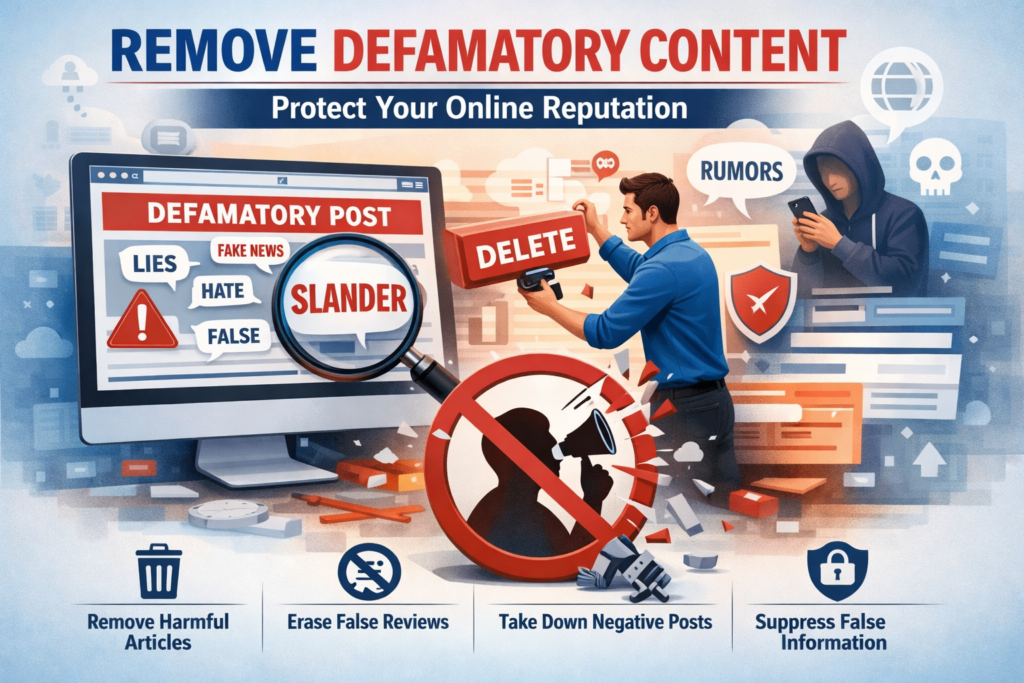
What Is Defamatory Content?
Defamatory content refers to false statements published online that damage a person’s or company’s reputation.
- False accusations of fraud
- Misleading complaint posts
- Fake news articles
- False reviews
- Harmful blog posts or forum discussions
If this type of content ranks on the first page of Google, it can affect your credibility and lead to lost opportunities.
Why Defamatory Content Appears in Google Search
Google indexes billions of pages from across the internet. When someone publishes harmful content on a website, Google may automatically include it in search results.
Common sources of defamatory content include:
- Complaint websites
- Forums and discussion boards
- Review platforms
- Blogs and news websites
Once indexed, the page can appear when someone searches for your name or company online.
Contact the Website Owner
The fastest way to remove defamatory content is to request removal directly from the website owner.
Steps to follow:
- Identify the website hosting the content.
- Locate the website’s contact page or administrator email.
- Send a polite removal request explaining the issue.
In many cases, website owners may remove or edit the content if it violates their policies.
Submit a Google Content Removal Request
If the website owner refuses to remove the content, you can request removal directly from Google.
Google may remove search results if they violate certain policies, such as:
- Personal information exposure
- Copyright violations
- Court-ordered removal
- Non-consensual explicit content
Although Google cannot delete the page itself, it can remove the page from search results.
Use DMCA Takedown Requests
If the defamatory content includes copyrighted material such as images, articles, or original content belonging to you, you can file a DMCA takedown notice.
The Digital Millennium Copyright Act allows copyright holders to request removal of unauthorized content.
Steps include :
- Identify copyrighted material used without permission.
- Prepare a DMCA notice.
- Submit the request to Google or the website host.
This method is often used to remove unauthorized images or copied articles.
Legal Defamation Removal
If the content contains false accusations that harm your reputation, you may pursue legal action.
A court order can require the website to remove defamatory content. Once you obtain a court order, Google can also remove the page from search results.
This approach is often used in cases involving:
- False fraud allegations
- Defamatory news stories
- Serious reputation damage
Suppress Negative Results With SEO
If removal is not possible, suppression is often the best strategy.
Search engine optimization (SEO) can push negative content lower in search results by promoting positive content.
Effective suppression strategies include:
- Publishing high-quality articles
- Creating positive news coverage
- Building authoritative backlinks
- Optimizing social media profiles
- Publishing press releases
Over time, positive content can outrank negative pages in Google search results.
Monitor Your Online Reputation
Monitoring search results helps you detect negative content early.
You can track mentions of your name or company online and take action quickly when harmful content appears.
Tools like Google alerts and reputation monitoring platforms allow you to stay informed about new mentions.
Professional Online Reputation Management
Removing defamatory content can be complex and time-consuming. Professional reputation management services specialize in identifying harmful search results and implementing effective removal or suppression strategies.
These services may include:
- Negative content removal
- Review removal
- Search result suppression
- Brand reputation repair
- Crisis reputation management
A professional reputation management team can help protect your online presence and restore trust.
Final Thoughts
Defamatory content on Google can damage both personal and business reputations. However, several solutions are available, from contacting website owners to using legal removal processes and SEO suppression strategies.
Taking action quickly is essential to minimize long-term damage and maintain a strong online presence.
If negative content is affecting your reputation, implementing the strategies in this guide can help restore your search results and protect your brand.
